
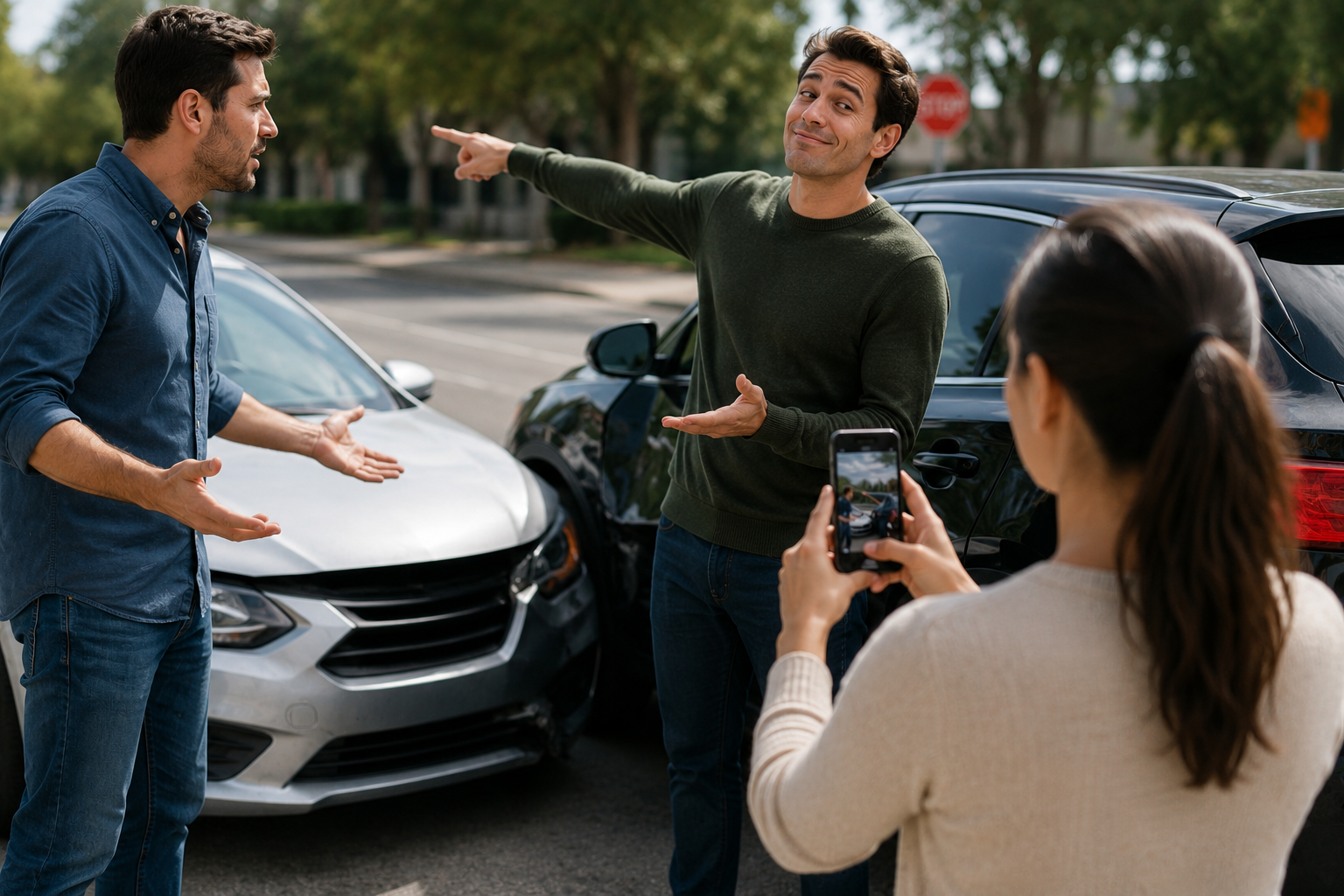
You know what happened.
The other driver knows what happened.
Then the insurance company calls and suddenly the story has changed.
The other driver claims you ran the red light.
They insist you changed lanes.
They deny speeding.
Or worse, they deny causing the accident at all.
Unfortunately, this situation is more common than many people realize.
People's memories fade. Stress affects recollection. Sometimes individuals genuinely remember events differently. In other situations, a driver may simply try to avoid responsibility for causing a crash.
The good news is that determining fault usually involves much more than one person's version of events.
Don't Panic If the Stories Don't Match
One of the biggest mistakes people make is assuming their claim is over simply because the other driver tells a different story.
It isn't.
Insurance companies investigate accidents using many different sources of information.
Rarely does an adjuster make a decision based solely on what one driver says happened.
Instead, they'll often consider the available evidence as a whole.
Evidence Often Speaks Louder Than Opinions
When fault is disputed, documentation becomes even more important.
Evidence may include:
Police reports
Scene photographs
Vehicle damage
Dash camera footage
Surveillance video
Witness statements
Medical records
Physical evidence from the roadway
Each piece helps investigators better understand how the collision occurred.
Independent Witnesses Can Make a Difference
When someone who wasn't involved in the accident describes what they saw, their observations may carry significant weight.
Witnesses may help clarify:
Which vehicle entered the intersection first
Traffic signal changes
Lane positioning
Vehicle speed
Driver behavior before the crash
If someone offers to provide their contact information after an accident, it's usually a good idea to keep it.
Photographs Can Tell an Important Story
Many people focus only on taking pictures of damaged vehicles.
While those photos are valuable, don't stop there.
Consider photographing:
The overall accident scene
Traffic signals
Stop signs
Skid marks
Road conditions
Weather
Debris
Vehicle positions
Visible injuries
Taken together, these images may help investigators better understand how the collision unfolded.
Modern Technology Can Help
Today's accidents often involve more evidence than ever before.
Depending on the circumstances, investigators may review:
Dash cameras
Security cameras
Business surveillance systems
Traffic cameras
Cell phone photographs
Commercial truck electronic data
If a commercial truck was involved, electronic records may also become relevant.
Be Careful What You Say After an Accident
Many people apologize simply because they're shaken up.
Statements like:
"I'm sorry."
"I didn't see you."
"Maybe it was my fault."
...may later be interpreted differently than you intended.
It's perfectly appropriate to check whether everyone is okay.
But when discussing fault, it's usually best to stick to the facts until the accident has been fully investigated.
Insurance Companies Look for Consistency
One reason adjusters ask so many questions is because they're trying to compare multiple sources of information.
They'll often review:
Driver statements
Police reports
Medical records
Witness accounts
Photographs
Vehicle damage
Available video
The more consistent those pieces of evidence are, the easier it becomes to understand what happened.
Don't Let Someone Else's Story Rush Your Decision
Sometimes people become so worried about a disputed claim that they accept the first settlement offer simply to put the situation behind them.
That isn't always the best approach.
If liability is still being investigated, it may make sense to fully understand the available evidence before making important decisions.
Our article Should You Accept the First Settlement Offer After a Texas Car Accident? discusses why patience can sometimes protect your interests.
Texas Uses Modified Comparative Fault
Texas follows a modified comparative fault system. That means more than one person can share responsibility for an accident. If the evidence shows both drivers contributed to the crash, responsibility may be divided based on each person's actions.
Because fault can directly affect compensation, gathering accurate evidence early becomes especially important.
This is another reason it's worth documenting everything you can after an accident rather than assuming the facts will speak for themselves.
What Should You Do If the Other Driver Changes Their Story?
If you discover the other driver is disputing what happened:
Stay calm.
Avoid arguing with them.
Continue preserving evidence.
Follow your doctor's treatment plan.
Keep records of all communication.
Let the investigation run its course.
Most importantly, continue focusing on your recovery.
The facts — not frustration — are what ultimately matter.
