
What Happens If the At-Fault Driver Was Working When the Accident Occurred?
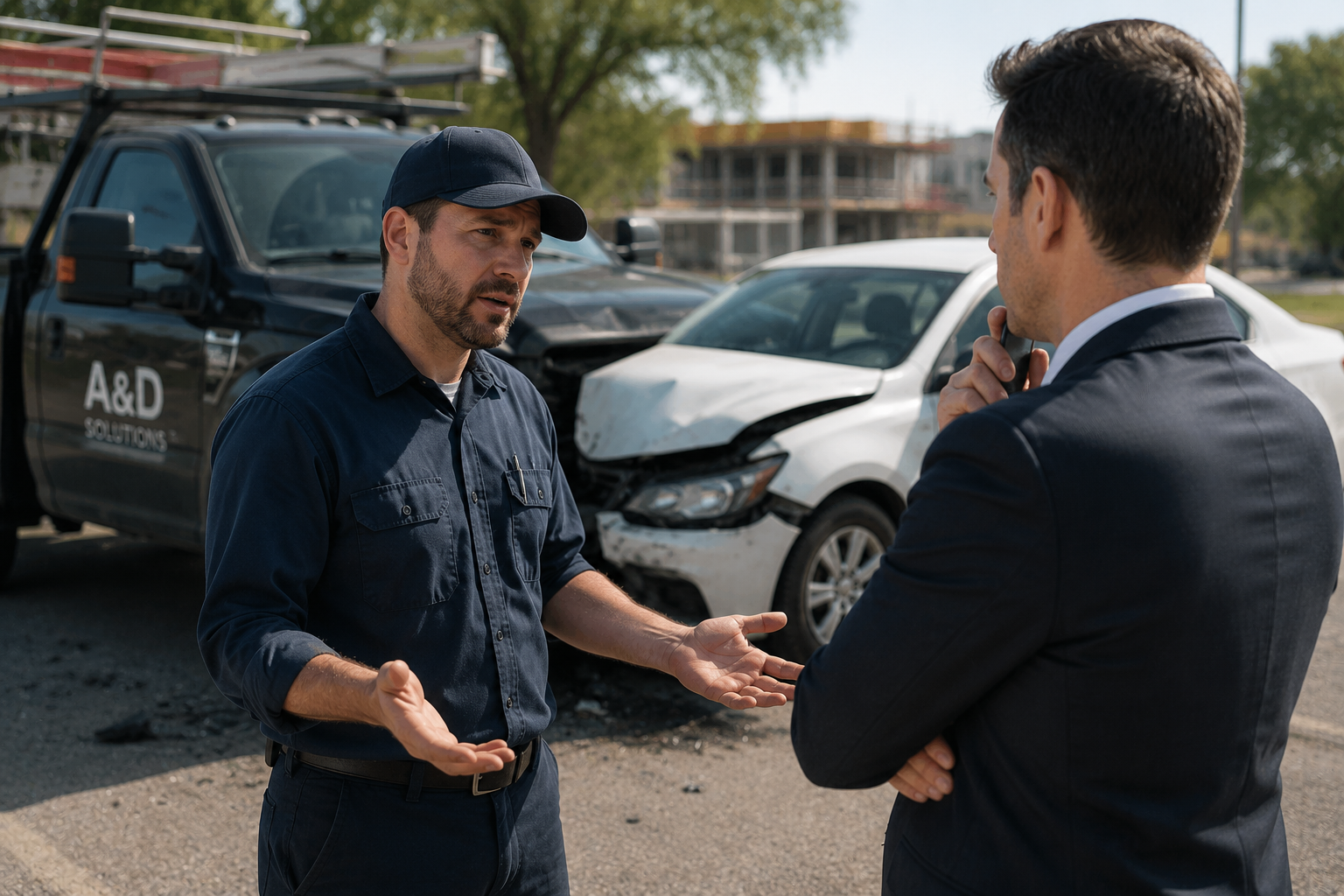
Most people assume a car accident claim begins and ends with the driver who caused the crash.
Sometimes that's true.
But when the at-fault driver was working at the time of the accident, the situation can become much more complicated. It can also create additional opportunities for an injured victim to recover compensation.
Whether the driver was operating a company vehicle, making deliveries, traveling between job sites, or running a work-related errand, their employer may also share responsibility for the accident. Texas law can hold employers responsible for the actions of employees who cause crashes while performing work-related duties.
Why It Matters Whether The Driver Was Working
After an accident, one of the first questions people usually ask is:
"Who is going to pay for all of this?"
Medical bills start arriving.
Vehicles need repairs.
Time away from work can create financial pressure almost immediately.
If the at-fault driver was working when the crash occurred, there may be additional insurance coverage available beyond the driver's personal auto policy. In many cases, commercial insurance policies carry significantly higher coverage limits than personal policies.
That can become extremely important when serious injuries are involved.
Common Examples We See
Many people think this only applies to semi-truck drivers.
It doesn't.
Work-related accidents can involve:
Delivery drivers
Contractors
Sales representatives
Utility workers
Service technicians
Construction vehicles
Company-owned cars and trucks
Employees traveling between job sites
In each of these situations, the employer's role may become an important part of the claim.
The Employer May Also Be Responsible
Texas generally follows a legal principle that allows an employer to be held responsible when an employee causes an accident while performing work-related duties.
In plain English, if an employee was doing their job when the crash occurred, the company may share liability for the harm caused. For example:
A delivery driver rear-ends another vehicle while making deliveries.
A contractor causes a crash while traveling between job sites.
A company driver runs a red light while transporting equipment.
In situations like these, the employer may not be able to simply point at the employee and walk away.
But Not Every Work-Related Vehicle Is The Same
One of the biggest questions in these commercial vehicle cases is whether the driver was actually working at the time of the accident.
That's not always as obvious as it sounds.
For example:
Were they making a delivery?
Were they driving to a customer appointment?
Were they traveling between work locations?
Were they running a personal errand?
Were they commuting to or from work?
The answers matter.
A driver who is actively performing job duties may create liability for their employer. A driver who has stepped away from work responsibilities for personal reasons may create a very different situation. Texas courts frequently examine these facts closely when determining responsibility.
What If The Driver Was In A Company Vehicle?
People often assume that if a company logo is on the side of a vehicle, the company is automatically responsible.
Unfortunately, it isn't always that simple.
A company vehicle can be an important clue, but investigators still need to determine:
Who owned the vehicle?
Who was driving?
Why were they driving?
Were they performing work duties?
Did the company authorize the trip?
The facts behind the trip often matter more than the logo on the door.
There May Be More Than One Responsible Party
One reason these cases deserve closer attention is that multiple parties may share responsibility.
Potentially responsible parties could include:
The employee
The employer
A trucking company
A vehicle owner
A maintenance provider
Another negligent driver
In serious accidents, identifying every potentially responsible party can make a significant difference in the outcome of a claim.
Evidence Becomes Extremely Important
If there is a question about whether a driver was working, evidence can quickly become critical.
Examples include:
Employment records
Dispatch records
GPS data
Delivery schedules
Time sheets
Vehicle logs
Company communications
Cell phone records
These records can help establish what the driver was doing before the crash and whether their actions were connected to their employment.
Don't Assume The Insurance Company Will Investigate For You
Insurance companies investigate accidents for one reason: to evaluate exposure.
Their interests are not always aligned with yours.
When employer liability may be involved, determining who should be responsible often requires a more thorough investigation than a typical car accident claim.
That's particularly true when serious injuries, commercial vehicles, or multiple insurance policies are involved.
Talk With A Texas Car Accident Lawyer
If you've been injured by a driver who was working at the time of the crash, there may be more to the case than initially appears.
The driver may be responsible.
Their employer may also be responsible.
Additional insurance coverage may exist.
Understanding those possibilities early can have a major impact on the outcome of your claim.
If you have questions about a Texas car accident involving a company vehicle, delivery driver, contractor, or employee acting on the job, Carrollton Injury Lawyers can help evaluate the circumstances and explain your options.
