
A collision involving a commercial truck is rarely as simple as one driver's word against another's.
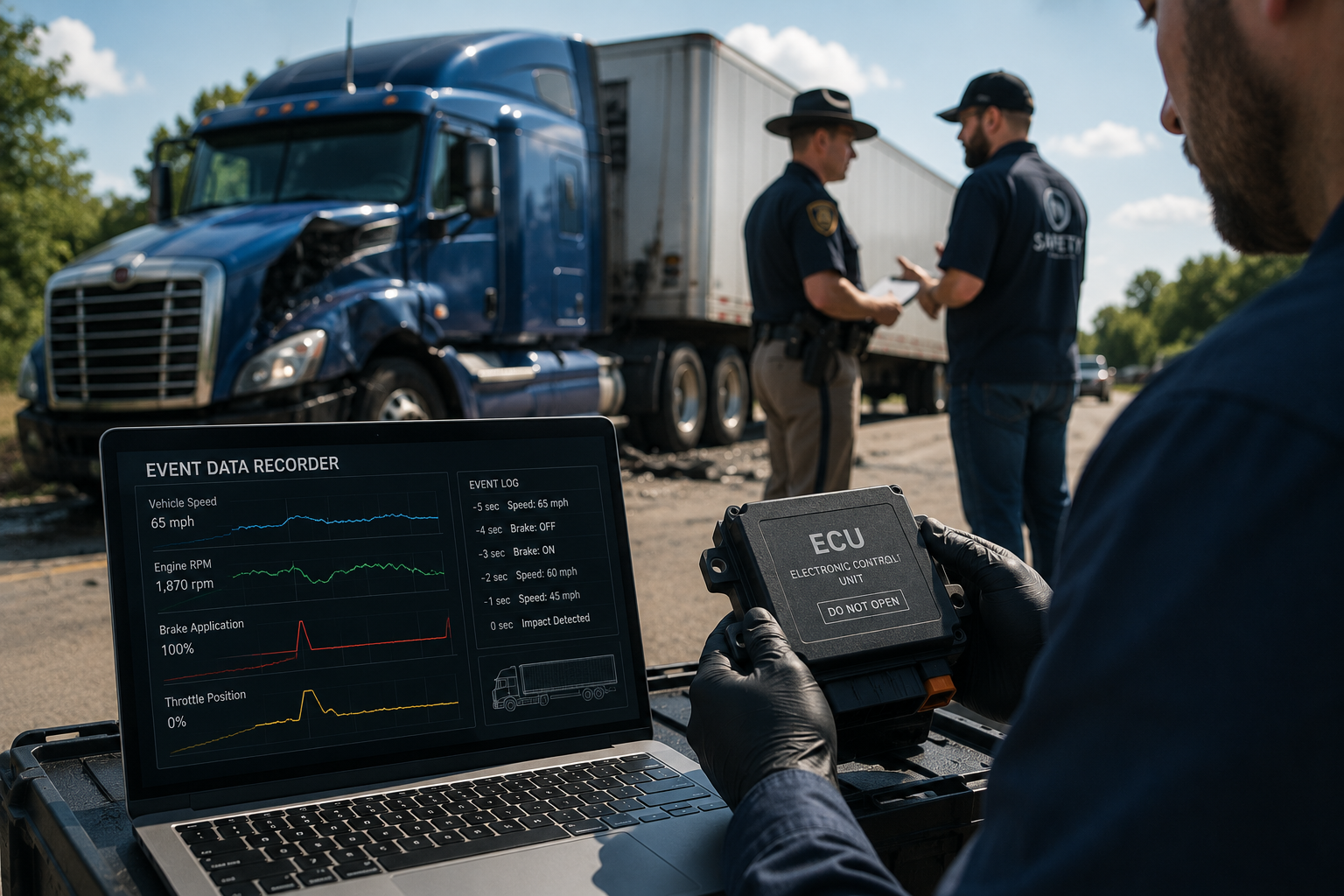
Unlike most passenger vehicles, many commercial trucks are equipped with electronic systems that record information before, during, and after a crash. Often referred to as a "black box," this technology can provide valuable insight into what happened in the moments leading up to an accident.
While black box data doesn't tell the entire story, it can help answer important questions that eyewitnesses sometimes cannot.
If you've been injured in a collision involving an eighteen-wheeler or commercial vehicle, understanding how this technology works can help you appreciate why truck accident investigations are often far more complex than ordinary car accident claims.
What Is a Truck's "Black Box"?
The term black box is commonly used to describe an Event Data Recorder (EDR) or other electronic control systems installed in commercial trucks.
Depending on the vehicle and manufacturer, these systems may record information such as:
Vehicle speed
Brake application
Throttle position
Engine RPM
Cruise control status
Seat belt usage
Airbag deployment
Steering inputs
Hours of operation
Sudden deceleration
This information may help investigators better understand how the collision occurred.
Why Is This Information Important?
Imagine two drivers telling completely different stories.
One says the truck was speeding.
The truck driver insists they were driving below the speed limit.
Eyewitnesses disagree.
Photographs only tell part of the story.
Black box data may provide objective information showing:
How fast the truck was traveling.
Whether the driver attempted to brake.
How long before impact braking occurred.
Whether cruise control was engaged.
Whether sudden steering corrections were made.
While this information doesn't automatically determine fault, it can become an important piece of the overall investigation.
Truck Accident Cases Are Different
Many people assume truck accident claims work just like ordinary car accident cases.
They usually don't. Commercial trucking companies are subject to federal safety regulations, driver log requirements, vehicle inspections, and maintenance standards that simply don't apply to most passenger vehicles.
That's one reason truck accident investigations often involve significantly more evidence than a typical collision. If you'd like to learn more about those differences, read our guide: Why Truck Accident Cases Are Different From Car Accident Cases.
Black Box Data Isn't Kept Forever
One of the biggest misconceptions people have is assuming this information is stored indefinitely.
Unfortunately, that's not always true. Depending on the truck and its recording system:
Data may eventually be overwritten.
Vehicles may return to service.
Electronic records may be lost.
Repairs can affect available evidence.
That's one reason truck accident investigations often begin much sooner than people realize.
Preserving evidence early can make a meaningful difference later.
Black Box Data Is Only One Piece of the Puzzle
A truck accident investigation rarely depends on one source of evidence.
Other important evidence often includes:
Police reports
Driver logbooks
Electronic logging device (ELD) records
Maintenance records
Inspection reports
Dispatch communications
Cell phone records
Dash camera footage
Surveillance video
Witness statements
The strongest claims usually combine multiple sources of evidence rather than relying on a single document or recording.
If you're wondering what information can strengthen your claim, our article What Evidence Helps Win a Texas Car Accident Claim explains many of the same principles that apply in commercial vehicle cases.
Can the Trucking Company Access This Information?
In many cases, yes.
The trucking company may have access to certain electronic records generated by its vehicles.
That doesn't necessarily mean the information is unfavorable to your claim.
It simply highlights why investigations often involve reviewing multiple sources of evidence before reaching conclusions.
Why Acting Quickly Matters
After any serious truck accident, time matters.
The longer an investigation is delayed, the greater the possibility that important evidence may become more difficult to obtain.
That includes:
Electronic records
Witness recollections
Surveillance footage
Vehicle inspections
Physical evidence from the crash scene
Prompt action helps preserve as much information as possible while it's still available.
Don't Focus Only on Vehicle Damage
Some people assume the amount of damage to the vehicles tells the entire story.
It doesn't. Your injuries, medical treatment, lost wages, and long-term recovery are equally important when evaluating a claim.
Insurance companies look at many different factors when reviewing truck accident cases. Our article What Insurance Adjusters Look For During a Personal Injury Claim explains how insurers evaluate evidence when determining the value of a claim.
When Should You Speak With a Truck Accident Lawyer?
Truck accident cases often involve:
Multiple insurance companies
Commercial carriers
Corporate policies
Federal regulations
Extensive documentation
Significant injuries
Because these claims can become complex very quickly, many people choose to speak with an attorney early in the process to better understand their options.
An experienced accident lawyer can help evaluate the available evidence, identify additional records that may exist, and guide you through the claims process.
Practice Area
https://personalpersonalinjury.com/
Carrollton Injury Lawyers Can Help
Commercial truck accidents frequently involve more evidence, more parties, and more complicated investigations than ordinary car accidents.
Understanding how black box data fits into that investigation is only one part of the picture.
If you or someone you love has been injured in a collision involving a commercial truck, Carrollton Injury Lawyers can review your situation, answer your questions, and help you understand your legal options
