
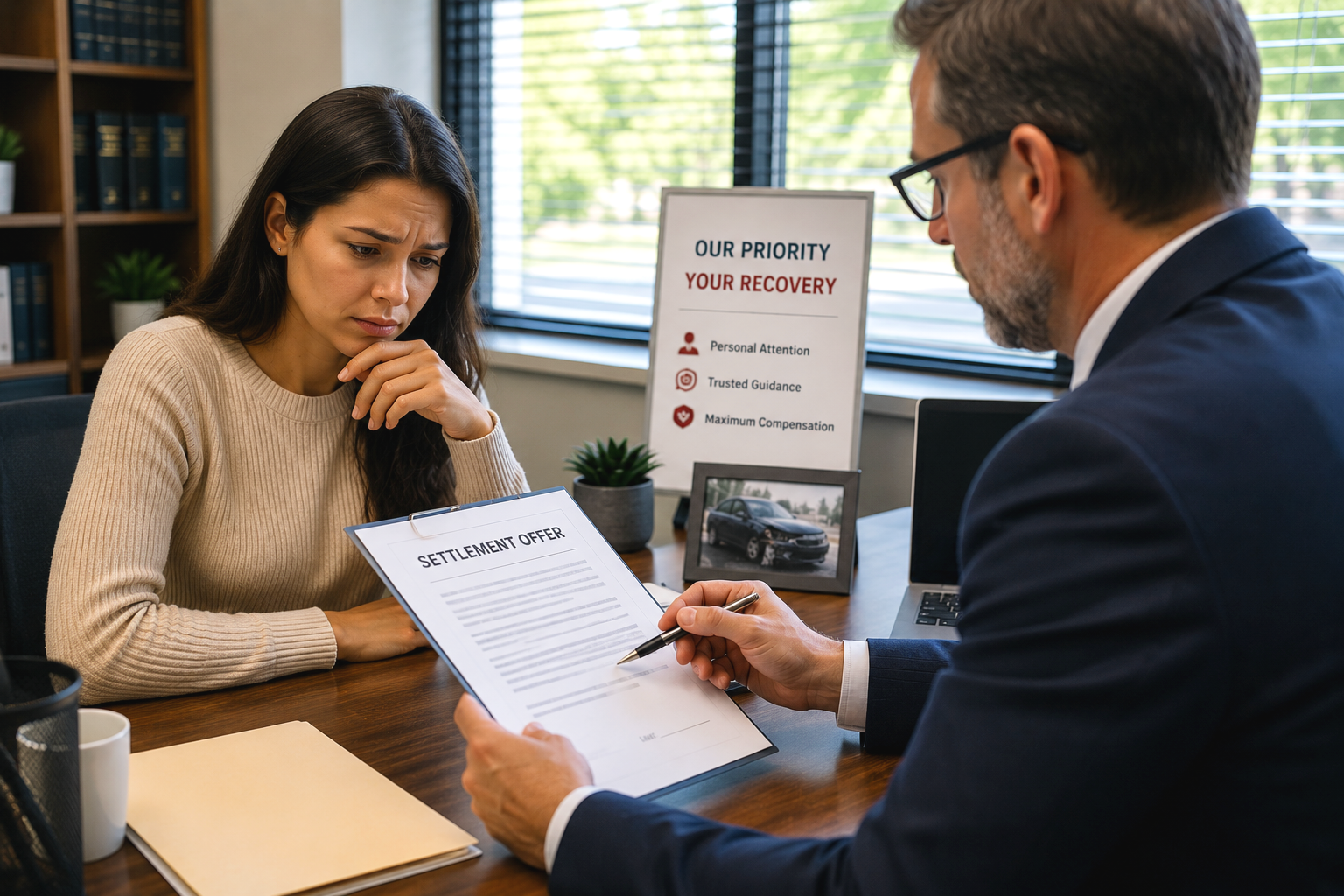
The phone rings just a few days after your accident.
The insurance adjuster sounds friendly. They ask how you're feeling, explain that they want to resolve your claim quickly, and then mention a settlement amount. After everything you've been through—the shock of the crash, dealing with vehicle repairs, medical appointments, and time away from work—it can feel like a relief.
For many people, accepting that first offer seems like the fastest way to move on.
But before you sign anything, it's worth asking one simple question: Do you actually know what your case is worth?
In many situations, the answer is no.
At Carrollton Injury Lawyers, we've seen countless accident victims receive settlement offers before they've even finished medical treatment or fully understood the extent of their injuries. While every claim is different, accepting the first offer without understanding your options can sometimes leave injured people responsible for expenses they never expected.
Why Do Insurance Companies Make Early Settlement Offers?
Many people assume an early settlement offer means the insurance company has already determined what their case is worth. In reality, early offers often arrive before the complete picture is known.
At that point, the insurance company may not yet know:
Whether you'll need additional medical treatment
If your injuries will require physical therapy
Whether you'll miss additional work
If long-term pain or limitations will affect your daily life
What your total medical expenses will ultimately be
Resolving claims early helps insurance companies reduce uncertainty and close files more quickly.
That doesn't automatically mean the offer is unfair.
It simply means you should understand exactly what you're agreeing to before accepting it.
One Signature Can End Your Claim
One of the biggest misconceptions people have is believing they can accept an early settlement and come back later if their injuries become worse.
Unfortunately, that's generally not how settlements work. When you accept a settlement, you'll typically be asked to sign a release that closes your claim permanently.
If your back pain becomes worse six months later...
If your doctor recommends surgery...
If you discover a concussion has lingering effects...
...you generally cannot reopen the claim simply because your injuries turned out to be more serious than anyone initially believed.
That's why it's important to understand the long-term impact of your injuries before agreeing to settle.
Have You Finished Medical Treatment?
One of the most important questions to ask yourself is whether you've actually reached a point where your doctors understand the full extent of your recovery.
Some injuries heal quickly.
Others don't.
Whiplash, soft tissue injuries, herniated discs, and concussions frequently evolve over days or even weeks after a collision.
If you're still experiencing symptoms — or you're continuing to receive treatment — it may simply be too early to know what your claim is truly worth.
If you've noticed new pain developing after the accident, you may also find our article What Happens If My Injuries Don't Appear Right Away? helpful once it's published as part of our resource library.
Strong Evidence Leads to Stronger Negotiations
Insurance companies don't simply look at medical bills. They evaluate the strength of the entire claim.
That includes:
Police reports
Photographs from the scene
Witness statements
Medical records
Vehicle damage
Lost wage documentation
Treatment history
The stronger your documentation, the easier it becomes to demonstrate how the accident has affected your life.
If you're unsure what information can strengthen your case, read our guide. It explains the types of evidence that often make the biggest difference during settlement negotiations.
Remember: The Insurance Adjuster Has a Job to Do
Insurance adjusters aren't necessarily your enemy.
But they also aren't your attorney. Their responsibility is to evaluate claims on behalf of the insurance company. That evaluation often includes reviewing:
Medical treatment
Consistency of care
Liability
Documentation
Prior injuries
Vehicle damage
Witness statements
Understanding that process helps explain why some claims receive higher offers than others.
If you're curious about how insurers evaluate injury claims, our article What Insurance Adjusters Look For During a Personal Injury Claim provides a closer look.
When Does Accepting the First Offer Make Sense?
Not every first offer should be rejected.
If the accident resulted in:
Minor vehicle damage
Minor injuries
No ongoing medical treatment
No missed work
No lasting symptoms
Then an early settlement may be entirely appropriate.
The important thing is making an informed decision—not feeling pressured to make a quick one.
When Should You Slow Down?
You should consider taking more time if:
You're still receiving medical care.
Your doctor hasn't released you from treatment.
You continue experiencing pain or limited mobility.
You don't yet know your future medical costs.
You've missed work or expect additional lost income.
You're unsure whether the settlement covers everything.
Waiting a little longer to understand your recovery is often far easier than trying to undo a settlement that's already been finalized.
How Carrollton Injury Lawyers Can Help
Every accident is different.
Some cases resolve quickly.
Others require additional investigation, ongoing medical treatment, or extended negotiations with the insurance company. If another driver's negligence caused your injuries, speaking with an experienced car accident lawyer may help you better understand whether a settlement offer reflects the true value of your claim.
We can review the offer, explain what's included, identify potential concerns, and answer your questions before you sign anything.
Sometimes the greatest value isn't negotiating a higher settlement — it's simply having enough information to make a confident decision.
If you've received a settlement offer after a Texas car accident, contact us for a free consultation before signing away your rights.
