
What Evidence Helps Win a Texas Car Accident Claim?
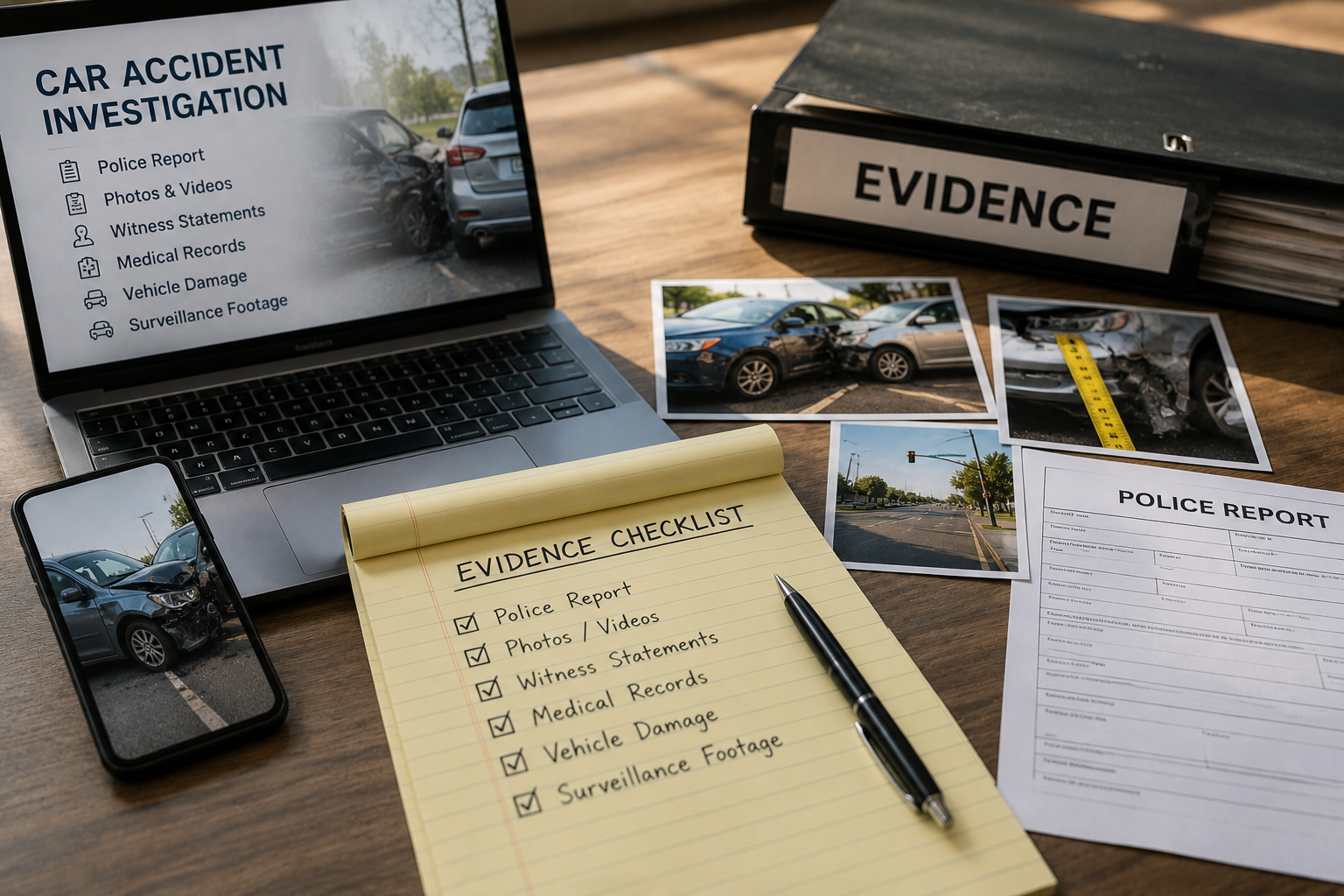
One of the biggest misconceptions people have after a car accident is that the insurance company will gather all of the evidence and fairly decide what happened.
Unfortunately, that's rarely how the claims process works.
Insurance companies investigate accidents to protect their own interests. If important evidence is missing — or disappears before anyone documents it — it can become much more difficult to prove what happened or recover the compensation you deserve.
The good news is that building a strong claim doesn't usually come down to one piece of evidence. Instead, it's about putting together a complete picture of the accident, your injuries, and how those injuries have affected your life.
Start With Photos & Video
If you're physically able, take photographs as soon as possible after the accident.
Pictures taken immediately after a crash often tell a story that can't be recreated days or weeks later.
Try to capture:
Damage to every vehicle involved
The position of the vehicles
Skid marks or debris
Traffic lights and road signs
Weather and road conditions
Visible injuries
The surrounding intersection or roadway
Even if the damage seems minor, those photos may become important later if fault is disputed.
The Police Report Matters
Whenever possible, report the accident and request that law enforcement respond to the scene.
A police report won't automatically determine who is at fault, but it often contains valuable information, including:
Driver information
Witness names
Officer observations
Citations issued
A description of how the crash occurred
Insurance companies routinely review police reports when evaluating claims, making them one of the most important pieces of documentation after an accident.
Witnesses Can Strengthen Your Case
Independent witnesses can make a significant difference.
Unlike the drivers involved, witnesses usually have no personal stake in the outcome of the claim.
Their observations may help confirm:
Which driver had the right of way
Whether someone was speeding
Distracted driving
Traffic signal changes
Road conditions
If someone witnessed the accident, ask for their name and contact information before leaving the scene.
Medical Records Connect the Accident to Your Injuries
One of the first questions an insurance adjuster may ask is:
"Were these injuries really caused by the accident?"
Medical records help answer that question.
Seeking prompt medical treatment creates documentation showing:
Your injuries
Your diagnosis
Recommended treatment
Recovery progress
Future medical needs
Waiting days or weeks to seek treatment can give an insurance company an opportunity to argue that your injuries were caused by something else or weren't serious enough to require immediate care.
Don't Throw Away Important Documents
Many people accidentally discard valuable evidence.
Keep copies of:
Medical bills
Prescription receipts
Physical therapy records
Vehicle repair estimates
Rental car receipts
Pay stubs showing lost income
Insurance correspondence
These documents help demonstrate the financial impact of the accident — not just how it happened.
Digital Evidence Is Becoming More Important
Modern accident investigations often involve much more than photographs.
Depending on the circumstances, useful evidence may include:
Dashcam footage
Traffic camera video
Security camera footage
Cell phone records
Vehicle event data
GPS information
Some of this evidence can disappear quickly.
Security camera footage may be overwritten within days, and electronic records aren't always preserved automatically. Acting quickly can make a meaningful difference.
One Small Mistake Can Weaken A Good Claim
We've seen people hurt otherwise strong cases by making simple mistakes.
Examples include:
Repairing a vehicle before it's documented
Posting details about the accident on social media
Throwing away damaged property
Missing medical appointments
Giving inconsistent statements to the insurance company
None of these mistakes automatically ruins a claim, but they can make it easier for an insurance company to question your injuries or dispute what happened.
You Don't Have to Gather Every Piece of Evidence Yourself
After a serious accident, your priority should be getting medical care and focusing on your recovery.
If you're unable to collect evidence at the scene, don't assume you've lost your opportunity to pursue a claim.
An experienced attorney can often help obtain:
Police reports
Surveillance footage
Witness statements
Medical records
Expert opinions
Additional documentation supporting your claim
The sooner that process begins, the better the chances of preserving important evidence before it's lost.
Talk With A Texas Car Accident Lawyer
Every accident is different, and every claim depends on its own facts.
The strongest cases aren't always the ones with the most severe crashes — they're often the ones supported by the best evidence.
If you've been injured in a Texas car accident, Carrollton Injury Lawyers can help evaluate your case, preserve important evidence, and explain your options during a free consultation.
